SEO for multi-location businesses

Every branch is its own search result. Treat it like one.

For franchises, chains, clinics and branch networks. RankMesh runs a Google Business Profile, a rank grid and review replies for each location, and writes location pages that are genuinely different from each other, so thirty branches never read as thirty copies.

Written by Yashpal Rathore, Local SEO. Reviewed by Siddique Khan, Technical SEO. Last reviewed .

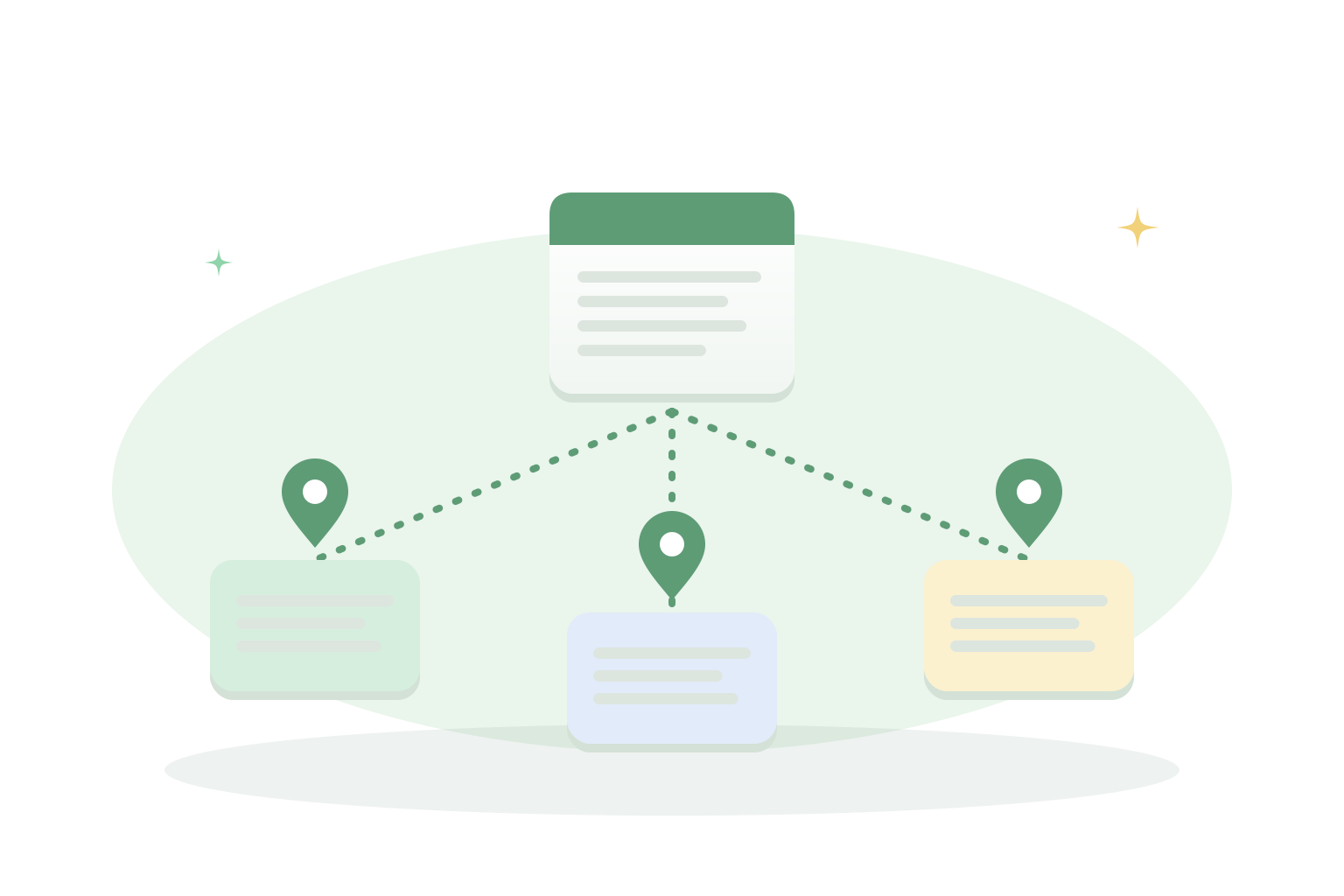
One main page linked to three branch pins, each with its own small page

The location page check.

The same branch page, written two ways. On the left, the template most chains roll out: swap the area name, publish thirty times. On the right, a page only that branch could have. RankMesh writes every location page from that branch’s own facts, to pass the checklist below.

Thin copy0 of 4 lines unique
  • Welcome to our Baner branch!
  • We offer the best services in Baner.
  • Our expert team is here to help you.
  • Visit our Baner branch today.

Swap “Baner” for any other area and nothing else changes. This is the pattern Google’s doorway page policy describes.

Real location page5 of 6 blocks unique
  • Open 9 am to 8 pm, closed Sundays; parking behind the building. (unique to this branch)
  • Two minutes from the Baner Road bus stop, opposite the main market. (unique to this branch)
  • Branch lead and team, with photos and what each person handles. (unique to this branch)
  • Services offered at this branch only, and the ones that need another branch. (unique to this branch)
  • Recent reviews from this branch, with replies. (unique to this branch)
  • Company story and booking form, shared with every branch. (shared)

Green dot: only this branch could say it. Grey: shared across the chain, which is fine in small amounts.

What every location page should carry

  • Hours, phone and address match the Google Business Profile exactly
  • Directions from local landmarks, not only a map embed
  • Who works there, and what that team handles
  • Services, stock or courses that differ by location
  • Reviews and questions from that location
  • Local events, offers or seasons that only apply there

All locations, one roster.

Head office sees every location side by side: profile health, how far it reaches on the rank grid, reviews waiting for a reply, and whether it has a real page of its own. The weakest rows get worked first. Illustrative rows:

Example location roster with profile, rank grid, reviews and page status per location
LocationProfileRank gridReviewsPage
Location ACompleteStrong near, fades at 3 kmAll repliedUnique
Location BHours missingTop 3 only at the door6 waitingThin copy
Location CCompleteStrong across the grid1 waitingUnique
Location DWrong categoryNot in top 1012 waitingNo page

Example data to show the layout, not a real client’s locations.

Two branch networks we run today.

MilkywaySofty logo

An ice cream and quick-eats franchise from Chennai with outlets in five cities. Every outlet gets its own profile checks, review replies and seasonal posts, and franchise enquiries run on a separate search track from customers looking for a sundae.

The outlet grid and results
Study Smart logo

A study-abroad and test prep consultancy with city branches in Pune, Mumbai, Delhi, Nashik, Kolhapur and Sambhajinagar. Each city page answers that city’s searches, like coaching near a particular area, instead of repeating the head office page.

The student journey and city pages

What multi-location teams ask us.

We have 30 branches and one website. Do we really need a separate page for every branch, and won’t 30 similar pages get us penalised?

You need a page for each branch people search for by name or area, and each page needs to be genuinely about that branch. Google’s spam policies on doorway pages are aimed at pages that differ only by the place name and exist only to catch searches. Thirty pages with real hours, real directions, real teams and real reviews are the opposite of that: they help the person deciding which branch to visit.

RankMesh writes each location page from that branch’s own facts, using the checklist in the location page check above, and your team confirms those facts before anything goes live. Where a branch has nothing different to say yet, the right answer is sometimes a combined city page until it does, not a thin page of its own.


Every branch manager wants their own say on reviews and posts. How do we keep control of the brand voice without becoming the bottleneck?

By splitting the work, not the rules. RankMesh drafts every review reply and every weekly post per location in one brand voice, with that location’s own details filled in. Drafts land in the review queue where the head office team approves them in batches, edits a word or sends one back. Replies never promise refunds, never name staff in a complaint and never argue. A negative review that points at a real fault, like wrong hours, also creates a task to fix the fault.

Our flagship ranks first on Google Maps but the newer branches barely show. Why, and what do you do first?

On Maps each location competes on its own profile, its own reviews and its distance from the searcher. A flagship with years of reviews does nothing for a branch across town. Newer branches usually lose on the basics: incomplete profiles, the wrong primary category, few reviews and no posts.

So the first pass is a profile check per location, then a rank grid: the same Maps search run from points around each branch, which shows how far each one reaches. Branches with the smallest reach get worked first. The local business page shows how a grid reads.

Do AI assistants care about individual branches?

Increasingly, yes. People ask “which clinic near Baner is open on Sunday?” and the answer names a branch, not a brand. Assistants build that answer from location pages, profiles and reviews, so the same work that fixes Maps fixes this. RankMesh asks ChatGPT, Gemini, Perplexity, Claude and Google AI Overviews local questions for your key cities and records which branch, if any, gets named.

The first 90 days, in waves.

Large networks are rolled out in waves, weakest locations first, so head office is never approving thirty branches of new work in the same week.

  1. 1Week 1

    Every profile connected and checked, the location list matched against the website, first rank grid per location, roster built.

    You approve: The master list of locations, hours and categories.

  2. 2Month 1

    Wave 1: the weakest locations get profile fixes, daily review reply drafts, a weekly post and a rewritten location page.

    You approve: Replies and posts in batches; each new location page once.

  3. 3Month 3

    Waves 2 and 3 cover the rest. Grids re-run to compare reach with week 1. Local AI answers checked for key cities.

    You approve: Seasonal posts and any offer that differs by location.

Plan fit: a business with two to five locations and someone at head office to approve replies daily can run Self-Serve. Most chains with more locations pick Managed, where a RankMesh account manager runs every profile and location page and you approve in batches. Networks with many sites, brands or approval layers should talk to us about Enterprise. Plans are on the pricing page.

Multi-location SEO FAQ

Short answers.

Can each branch manager see only their location?

Head office sees every location. Ask us about views for individual branch owners when you set up.

Do you create Google Business Profiles for new branches?

We connect and run the profiles you own and guide you through verifying new ones, which Google requires the business to do.

We only have one location. Is this for us?

The small business page is a better fit for a single owner-run location.

Which AI assistants do you track?

ChatGPT, Gemini, Perplexity, Claude and Google AI Overviews today. Grok and Microsoft Copilot are coming soon.

See which of your locations Google cannot see.

A free report shows how your brand and branches read to Google and to AI assistants today.

Get my free report

Book a 20-minute demo

Tell us a little about your business, then pick a time that suits you.

Before you go: see how AI search sees your site

A free report on whether ChatGPT, Gemini and Google AI recommend your business. No sign-up, results in seconds.